Categories
2026 Real Estate, Buyers, Buying A Home, Buying A Home In West Seattle, buying tools, living in West Seattle, Moving To Seattle, moving to West Seattle, real estate strategy, seattle, Seattle Real Estate, Sellers, Selling Tools, Selling Your Home, Top Agent, Washington State, West Seattle, West Seattle a good place to live, West Seattle neighborhoods, West Seattle Real EstatePublished May 4, 2026
Living in West Seattle: A 2026 Neighborhood Guide for Buyers Comparing Seattle Neighborhoods

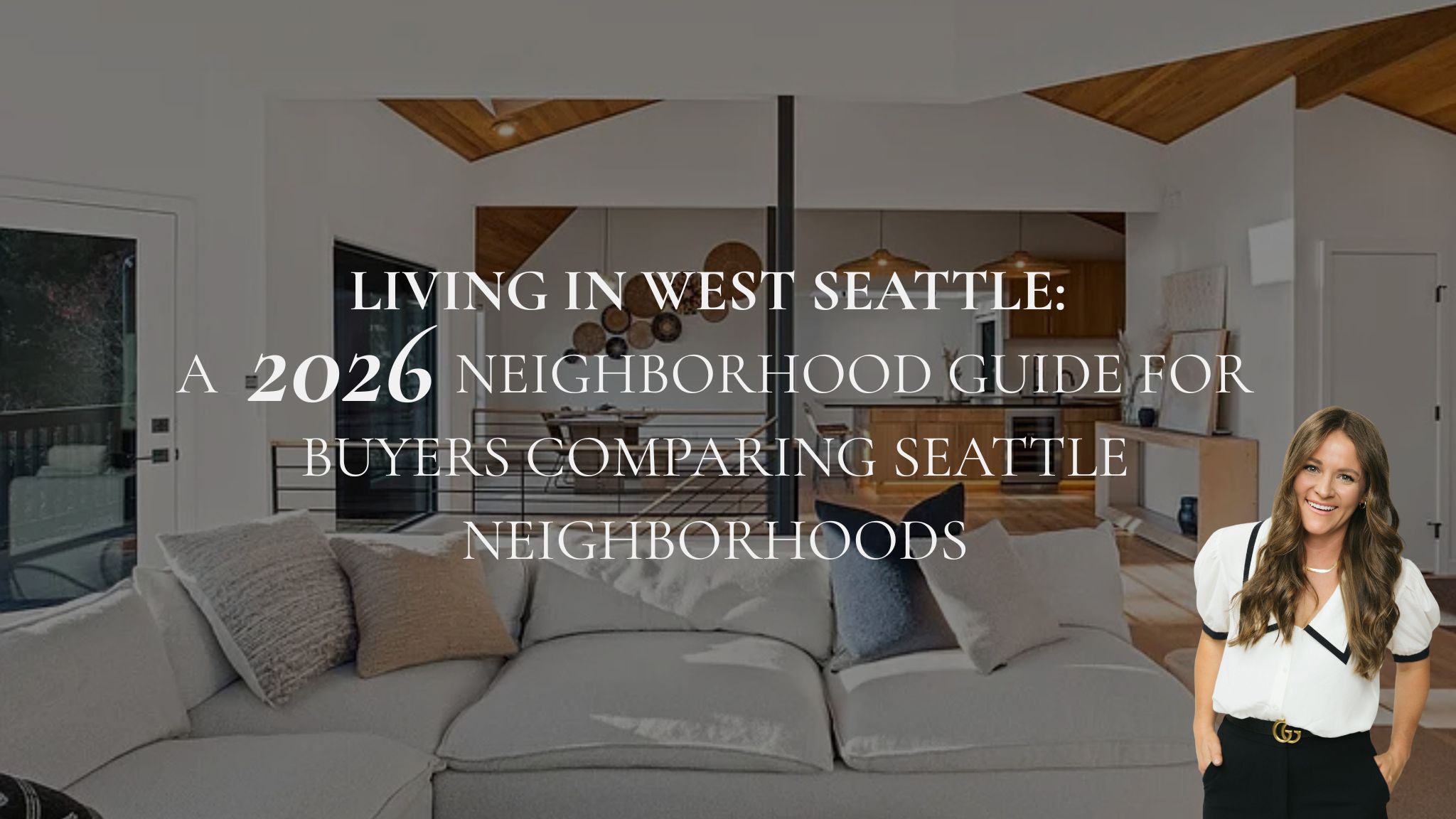
If you're house hunting in Seattle right now, West Seattle almost always ends up on the shortlist and for good reason. It's one of the few parts of the city where you can still find a detached single-family home with a yard, trees, and a water view without stretching into $1.5M territory. That combination is getting harder to find as prices climb across Seattle proper.
But West Seattle isn't one neighborhood. It's a peninsula, and each pocket, Alki, Admiral, Junction, Fauntleroy, High Point, Westwood Village, Delridge, has its own price range, vibe, and trade-offs. I've shown homes in all of them, and the difference between a block in Alki and a block in Delridge can be significant in both price and lifestyle.
This guide is for buyers actively comparing West Seattle to other Seattle neighborhoods in 2026. I'll walk you through what it's actually like to live here, where the price breaks happen, how the commute really works post-bridge-reopening, and the honest pros and cons I tell my clients before they write an offer.
West Seattle at a glance
West Seattle sits across the Duwamish Waterway from downtown Seattle, connected primarily by the West Seattle Bridge. It's technically part of Seattle city limits same taxes, same schools district (Seattle Public Schools), same city services but it feels more like a collection of small towns stitched together than a typical urban neighborhood.
Quick facts for 2026:
- Median home sale price: ~$780,000 (up about 2.6% year over year)
- Average days on market: around 7 days
- Market competitiveness: very competitive, with many homes selling above list
- Home types: mostly single-family detached, with growing townhome and ADU inventory
- Commute to downtown Seattle: 15–25 minutes by car, 20–35 by bus
Compared to the broader Seattle median of around $865K, West Seattle still offers real value especially if you're looking for a detached home rather than a condo or townhome.
The sub-neighborhoods of West Seattle (and what each one costs)
This is the section most buyers skip and later wish they hadn't. The neighborhood name on Zillow matters a lot here.
Alki
The waterfront strip along Alki Beach. Think beach vibes, volleyball, the Seattle skyline across the water, and some of the best sunsets in the city. Homes directly on Alki Avenue or with unobstructed water views can run well over $1.5M. A few blocks inland, you can find more reasonable prices. Great for walkability and lifestyle, less ideal if you want a big yard or quiet streets in summer.
Admiral
Often called "Admiral District" or just "Admiral," this area sits up on the bluff above Alki. Classic craftsman homes, tree-lined streets, Hiawatha Playfield, and some of the best sweeping views in the city. Admiral typically prices at a premium often 10–20% above the West Seattle median because of the views, schools, and walkability to both Alki and the Junction.
The Junction (California & Alaska)
The heart of West Seattle's walkable commercial core. You'll find the farmers market, Easy Street Records, a growing food scene, and most of the new construction townhomes and condos. If you want a walkable lifestyle without crossing the bridge, this is the spot. Prices here have held strong because of walkability, and townhomes in the $700K–$900K range are common.
Fauntleroy
Further south, bordering the Fauntleroy ferry terminal that connects to Vashon Island and Southworth. Quieter, leafier, more family-oriented, with Lincoln Park as its anchor. A solid bet for buyers who want space and trees and don't mind a slightly longer commute.
High Point
Planned mixed-income community built in the 2000s on some of the highest ground in West Seattle. Newer construction, good-sized lots for the price, and some of the most competitive pricing in the peninsula. A good entry point for first-time buyers.
Delridge & North Delridge
The most affordable pocket of West Seattle, running along Delridge Way. More diverse housing stock, some great mid-century homes, and improving amenities. Commute via the bridge is actually faster from here than from Fauntleroy. A smart choice if you're prioritizing price and you're comfortable doing a little renovation.
Westwood & Arbor Heights
The far southern end of West Seattle. More suburban feel, bigger lots, and generally lower prices than the northern pockets. The Westwood Village shopping center provides most day-to-day retail. Best for buyers who want square footage and a yard and are willing to trade urban walkability.
What it's actually like to live here
Here's what I tell buyers who've never spent time in West Seattle:
You'll use the bridge. A lot. The high-rise bridge reopened in 2022 after extensive repairs, and it's been solid since. But traffic on and off the peninsula is real, especially at commute times. Most people plan around the 7–9 a.m. and 4–7 p.m. windows. The Low Bridge is restricted to transit, freight, and emergency vehicles at peak times, so don't plan on using it as a shortcut unless you work specific hours.
Weather feels a little different. West Seattle gets slightly less rain than downtown because of the Olympic rain shadow. It's not a dramatic difference, but longtime residents will tell you they notice it.
The community is tight and the West Seattle Blog is legendary. West Seattle has its own hyperlocal news site, West Seattle Blog, and I'm not exaggerating when I say it sometimes beats the local TV news. They cover things happening in the neighborhood within an hour of them happening traffic incidents, business openings, even which coyote is back in which greenbelt. If you live here, you read it. It's one of the best examples of hyperlocal journalism anywhere in the country, and honestly one of the underrated perks of living in West Seattle.
You can live here car-optional in parts. Around the Junction and Alki, you can walk to most daily errands. Buses to downtown are frequent. But true car-free living is harder here than in neighborhoods like Capitol Hill or the U District.
The views are real. Even homes without a designated "water view" often catch glimpses of the Sound, downtown, or the Olympics. This is a real resale advantage down the line.
The food, fitness, and culture scene
One of the things that surprises buyers new to West Seattle is how much is actually here. You don't need to cross the bridge for good dinner, a fitness class, or a weekend outing.
Restaurants: Several of the greater Seattle area's staple restaurants have chosen West Seattle as one of their locations, Cactus, Portage Bay Café, and Posto all have West Seattle outposts. Locally, the Junction alone has dozens of independent spots that rotate in and out, and the dining scene has genuinely leveled up in the last five years.
Fitness and wellness: If boutique fitness matters to you, you're covered. There are excellent Pilates and cycle studios, barre classes, and the well-regarded West Seattle Gym if you prefer a more traditional setup. Yoga studios, climbing-adjacent options, and running groups all have active followings here.
West Seattle Art Walk: One of my favorite things about the neighborhood is the monthly Art Walk, held on the second Thursday of every month. Local shops, cafés, and restaurants across Alki, Admiral, Alaska Junction, and Morgan Junction transform into pop-up galleries featuring local artists. Many restaurants run Art Walk happy hour specials, and West Seattle is reportedly the only Seattle neighborhood that hosts an Art Walk year-round. It's genuinely fun and a great way to get a feel for the neighborhood if you're house hunting.
Easy Street Records: No guide to West Seattle is complete without Easy Street. Opened in the Junction in 1988, it's been named one of the ten best record stores in the country by Rolling Stone and featured by Time magazine among the great American record shops. The store has hosted legendary in-store performances by Pearl Jam (including a famous 2005 surprise set that was later released as an EP), Lou Reed, Elvis Costello, Brandi Carlile, Lana Del Rey, Patti Smith, Kings of Leon, and yes, Macklemore, who is closely tied to the Seattle music scene the store has helped nurture for nearly four decades. If you're a music person, you will lose afternoons here. It's also a full café and bar, not just a record store.
This is where most buyers need help making the actual decision. Here's how I frame it:
West Seattle vs. Ballard: Ballard is more walkable and has a denser restaurant and nightlife scene. West Seattle offers more yard, more parks, and better water access. Prices are roughly comparable, with Ballard slightly higher per square foot in walkable pockets.
West Seattle vs. Queen Anne: Queen Anne is closer to downtown and Seattle Center, with similar craftsman housing stock. Queen Anne typically prices 15–25% higher than equivalent West Seattle homes. If budget is tight and you like tree-lined residential streets, West Seattle wins.
West Seattle vs. Beacon Hill: Beacon Hill has become a value play in Seattle, with light rail access and rising prices. West Seattle has more single-family inventory and water views but no light rail (yet — more on that below). Beacon Hill is often faster to downtown in the morning.
West Seattle vs. the Eastside (Bellevue, Kirkland): This is the comparison I field most often. The Eastside offers newer inventory, top-ranked schools, and shorter commutes to tech campuses. West Seattle offers a more distinctly Seattle feel, better water access, and usually lower prices for comparable homes. Tax-wise, Seattle residents pay Seattle taxes; Eastside residents pay their city's. The school question is the biggest swing factor for families.
Schools in West Seattle
West Seattle is part of Seattle Public Schools. Elementary options include West Seattle Elementary, Alki, Lafayette, Gatewood, Fairmount Park, Arbor Heights, Concord International, Roxhill, Highland Park, and Sanislo and assignments follow SPS attendance zones, which are worth checking street by street before you buy.
One development worth flagging for buyers in 2026: Alki Elementary is finishing a full rebuild and is set to open for the 2026–2027 school year. It's been the biggest construction project in West Seattle a brand-new ~80,000-square-foot, multi-story building replacing the old school, with features like a three-story commons area with skylights, exposed timber, and overhanging reading nooks. The new campus will also become a site for Seattle Public Schools' Highly Capable (gifted) program, which previously required a commute across the bridge to Thurgood Marshall. If you have elementary-age kids and are looking in the Alki attendance zone, this is a genuine upgrade worth factoring into your home search.
Middle school options include Madison, Denny International, and Louisa Boren STEM K-8. West Seattle High School and Chief Sealth International serve the peninsula at the high school level.
Private school standouts in West Seattle: If you're considering private education, West Seattle has several strong options right in the neighborhood:
- Hope Lutheran School (PK-8) — a long-established Lutheran school in the Junction, known for small class sizes and a tight-knit community feel
- Holy Rosary School (PK-8) — a highly regarded Catholic STEM+ school with over 100 years of history in West Seattle, consistently strong reviews, and a strong high school prep reputation
- Westside School (PK-8) — an independent school with a progressive, inquiry-based approach that draws families from across West Seattle and beyond
Having three strong private school options on the peninsula means families have real choice without a long commute, something not every Seattle neighborhood can claim.
Families often ask me if West Seattle public schools are "good." My honest answer: SPS school quality varies meaningfully block to block, and the rankings shift. If schools are a top priority for you, pull current data from GreatSchools and the Washington OSPI report card for the specific schools that serve the address you're considering, and if possible, talk to parents in that attendance zone. I'm happy to share what I hear from clients, but real due diligence matters here.
The commute question
To downtown Seattle: 15–25 minutes by car on a normal day via the West Seattle Bridge. Buses run frequently; the RapidRide C Line is the workhorse, with runs every 10–15 minutes at peak.
To South Lake Union (Amazon): Typically 20–30 minutes by car. A bit trickier by transit usually a transfer downtown.
To Bellevue and the Eastside: 25–45 minutes depending on 520 vs I-90 and time of day. If you're commuting to Bellevue daily, this is the biggest lifestyle trade-off of West Seattle.
To SeaTac Airport: 15–20 minutes. One of the best airport access points in the city.
Light rail: The Sound Transit West Seattle Link extension is planned, with completion timelines that have shifted several times. As of 2026, construction is ongoing and the opening date remains in flux. I wouldn't buy a home based on a specific light rail opening date, but the general direction of travel is positive for long-term home values near planned stations.
Pros and cons of living in West Seattle
Pros:
- Detached single-family homes still available under the Seattle median
- Strong water and mountain views across many pockets
- Distinct community feel with active local culture and year-round monthly Art Walk
- Great food scene, with both staples (Cactus, Portage Bay, Posto) and strong independents
- Solid fitness options — Pilates, cycle, barre, and West Seattle Gym
- Iconic cultural landmarks like Easy Street Records
- The West Seattle Blog keeps you plugged in better than any other Seattle neighborhood
- Brand-new Alki Elementary opening fall 2026, plus strong private options (Hope Lutheran, Holy Rosary, Westside)
- Good access to downtown and SeaTac
- Parks everywhere — Lincoln Park, Alki, Schmitz Preserve, Camp Long
- Less dense and less noisy than core Seattle neighborhoods
Cons:
- Bridge dependency creates real commute variability
- No light rail yet
- Some pockets lack walkability, you'll likely want a car
- Competition is still fierce; homes in desirable pockets move in a week
- School assignments vary meaningfully by address
Is now a good time to buy in West Seattle?
Honest answer: it's one of the more favorable buyer markets West Seattle has seen in several years, but it's not a buyer's market in the traditional sense. Inventory is better than it's been. Well-priced homes still go fast and often get multiple offers. Homes that are priced aggressively or show poorly sit longer than they used to, and there's more room to negotiate than in 2021 or 2022.
If you're planning to own for at least 5–7 years and you've found a neighborhood pocket you genuinely like, West Seattle has strong long-term fundamentals: limited land, water access, walkability in key spots, and future transit investment. Short-term price movements are harder to predict.
Frequently asked questions about living in West Seattle
Is West Seattle a good place to live? For buyers who want a Seattle address with more space, more nature, and more of a neighborhood feel than the urban core, yes. It's less ideal for buyers who prioritize nightlife density, being walkable to major employers, or light rail access.
How much does a house cost in West Seattle? As of early 2026, the median sale price is around $780,000, though pricing varies significantly by sub-neighborhood. Expect $650K–$900K for most single-family homes, with Alki and Admiral pushing higher and Delridge and Westwood offering value.
Is West Seattle safe? Safety varies by block, as it does in any Seattle neighborhood. Most of West Seattle sees lower crime rates than the citywide average, though Delridge and some commercial corridors see more property crime. I recommend pulling neighborhood-level data from SPD and visiting at different times of day before deciding.
How long is the commute from West Seattle to downtown? Typically 15–25 minutes by car, 20–35 minutes by bus via the RapidRide C Line.
Will the West Seattle light rail raise home values? Historically, proximity to new light rail stations has lifted home values in Seattle neighborhoods. I'd expect similar effects here, though it's not worth overpaying today for a promised opening date that has shifted before.
Thinking about buying in West Seattle?
If you're comparing West Seattle to other Seattle neighborhoods, I can help you pressure-test the decision with current market data, off-market opportunities, and honest pros and cons for the specific pockets you're considering. I live and work in this market every day and no two blocks are the same.
Schedule a buyer consultation →
Or if you just want to browse, see current West Seattle homes for sale →.
RaeAnne Marcum
| RaeAnne Marcum Real Estate | REAL BROKER
or another way